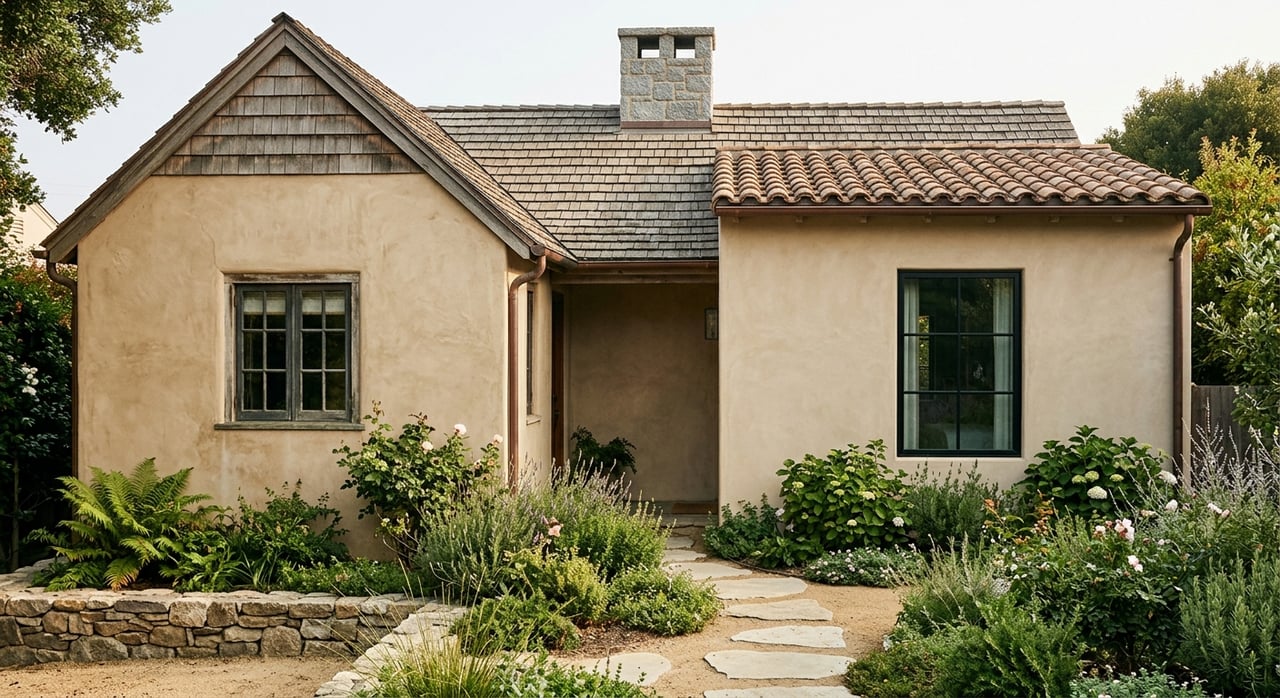
Choosing Between Historic And Newer Carmel Homes
May 28, 2026
May 28, 2026
If you are drawn to Carmel, chances are you are choosing between two very different kinds of homes: one with storybook charm and one with a more current layout and systems. That choice is not just about style. In Carmel-by-the-Sea, age, historic status, design review, and site conditions can shape what you can change after you buy. This guide will help you compare historic and newer Carmel homes so you can make a confident decision with fewer surprises. Let’s dive in.
Carmel’s housing stock is unusually varied. According to the City of Carmel-by-the-Sea’s historic context materials, no tracts of similar homes were built here and no block was developed in a single period. That helps explain why two homes on nearby streets can offer very different ownership experiences.
Single-family homes are the most common property type, but the city’s residential neighborhoods reflect many eras and architectural styles. The local landscape also plays a role, with wooded lots, hills, and coastal conditions influencing how homes were sited and built over time.
For you as a buyer, this means the choice between a historic cottage and a newer home is about more than appearance. It is often a choice between preservation and flexibility, or between character and predictability.
In Carmel, “historic” is not just a design label. The city has an adopted Historic Context Statement and maintains an Inventory of Historic Resources, which means historic status is a formal regulatory category.
That distinction matters. A home may look old and charming, but the real question is whether it is listed as a historic resource or may be evaluated as one during a future project.
Carmel’s historic homes include early cottages and several later architectural styles identified by the city. Buyers may see:
These details often create the warmth and individuality buyers love. They can also affect what changes are allowed later.
If a structure is deemed historic, the rules are more restrictive. The city says a historic structure cannot be demolished, and additions or alterations must be consistent with the Secretary of the Interior’s Standards.
That does not mean you cannot maintain the home. Ordinary maintenance and repair are generally allowed when the work does not change the design, materials, or exterior appearance. Still, exterior changes usually involve more review and less design freedom than many buyers expect.
Even if a home is not already on the historic inventory, age can still matter. The city says homes that are more than 50 years old may trigger a historic evaluation if the owner wants exterior alterations.
For you, that means a purchase of an older home may come with future review steps even if the property is not formally historic today. It is wise to understand that possibility before planning a remodel.
Window replacements show how specific the rules can be. In Carmel, changes to window materials, size, and placement require approval.
The city says unclad wood windows with external divided lights are the Carmel standard, and vinyl windows are not appropriate. Other materials may be considered in some cases when they better suit the architecture, such as metal windows on a modern building.
In Carmel, the permit process matters whether you buy historic or newer. The entire city is within the coastal zone and operates under a certified Local Coastal Program, so residential work is shaped by both local planning rules and coastal policy.
The Planning Division says most exterior alterations and changes to site coverage require design review approval. Most work involving construction, electrical systems, re-roofing, plumbing, and driveway replacement also requires a building permit.
Depending on the scope, buyers should expect review for projects such as:
For historic properties, there is another layer. Historic projects require review by the city’s historic preservation consultant and approval from the Historic Resources Board.
A newer home often offers more flexibility, but it is not a blank canvas. Carmel’s residential code says proposed site development, exterior alterations, rebuilding, rehabilitation, and new construction all require design review.
The city can deny or escalate projects that are not visually compatible with the surrounding area. So even if you buy a more recently built home, your plans still need to fit Carmel’s village character and local rules.
Lot size is only part of the story. The city says allowed floor area depends on lot size, but the maximum may not be achievable on constrained sites.
That can happen when a property has steep slopes, significant trees, or grading issues. Design review also brings extra scrutiny to projects that affect significant trees or require larger grading.
Here is a simple way to compare the ownership experience:
| Feature | Historic Carmel Home | Newer Carmel Home |
|---|---|---|
| Character | Often rich in original detail and architectural personality | Often more current in layout, systems, and finishes |
| Exterior changes | More likely to require preservation review and design compromise | Usually more flexible, but still subject to design review |
| Demolition | Historic structures cannot be demolished except through narrow approval pathways | Demolition and rebuild still require review and local approvals |
| Windows and materials | Material and design choices are closely controlled | More flexibility, though appearance still matters |
| Energy upgrades | Often more customized and potentially more complex | Usually starts from a more current baseline and may be easier to upgrade |
| Buyer fit | Best for buyers who value character and accept process | Best for buyers who want more predictability and easier maintenance |
Energy efficiency is another important difference. California’s 2025 Energy Code takes effect January 1, 2026, and permit applications on or after that date must use approved 2025 compliance software.
The California Energy Commission says the updated code applies to new construction, additions, and alterations. It emphasizes heat pumps, photovoltaic and battery storage, and stronger ventilation standards.
In practical terms, a newer Carmel home will often begin closer to the current efficiency baseline. A historic cottage may still be improved, but the path can involve more customized planning if you are trying to balance energy performance with preservation and design review requirements.
There can be. The city’s Mills Act materials say a Mills Act contract is an agreement between the City of Carmel and the owner of a historic building.
Under that agreement, the owner may receive reduced property taxes in exchange for rehabilitation, maintenance, and preservation obligations. The city says properties listed on the Historic Register are eligible.
This does not mean every historic home will be the right financial fit. It does mean that for some buyers, the preservation responsibilities may come with a meaningful incentive.
A historic Carmel cottage may be the better fit if you care most about original character, architectural detail, and the stewardship of a legacy property. You may also be comfortable with approvals, specialized maintenance, and a slower path for exterior changes.
A newer Carmel home may suit you better if you want a more predictable ownership experience, more layout flexibility, and a cleaner path for upgrades shaped by current code standards. You will still need to work within Carmel’s design rules, but the process is often more straightforward.
In our experience, the right choice usually comes down to how you want to live, not just what photographs best. If you value provenance and charm, a historic home can be deeply rewarding. If you want ease, efficiency, and fewer unknowns, a newer home may align better with your goals.
When you are comparing homes in Carmel, details like historic status, age, lot constraints, and future permit pathways can matter as much as square footage. If you want experienced, local guidance as you weigh your options, The Profeta Team offers thoughtful, high-touch support rooted in decades of Carmel market knowledge.
Stay up to date on the latest real estate trends.
We welcome the opportunity to guide you in realizing your Real Estate goals and are grateful for the clients for whom we have already had the privilege to help.

The Profeta Team
(831) 601-3207
[email protected]
Junipero Between 5th & 6th Ave
Carmel, CA 93921
Judie Profeta | CA DRE# 00703550
Julia Humason | CA DRE# 10872599
Rob Profeta | CA DRE# 01313907