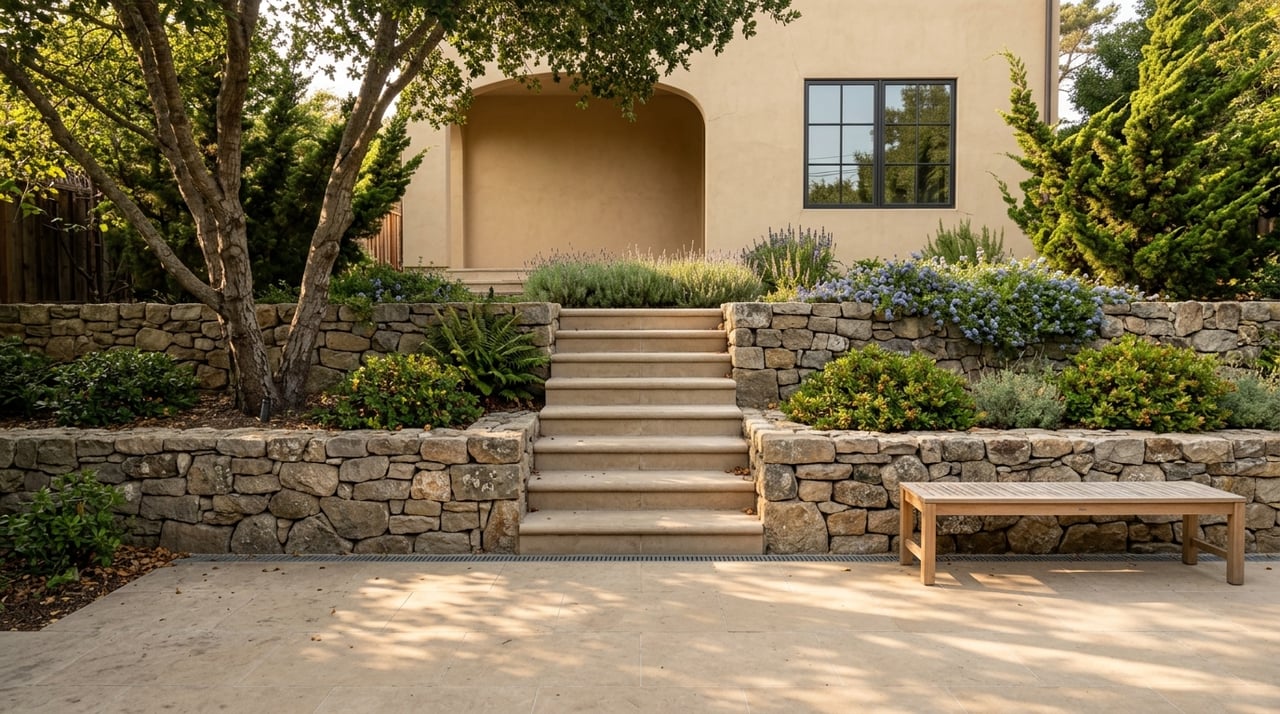
Understanding Lot Types And Settings In Carmel
June 4, 2026
June 4, 2026
Wondering why two Carmel properties with similar square footage can feel completely different? In Carmel-by-the-Sea, the lot often shapes your daily experience as much as the home itself. If you are comparing village cottages, wooded retreats, or ocean-side parcels, understanding lot type and setting can help you make a smarter decision. Let’s dive in.
Carmel-by-the-Sea is a small coastal city of about one square mile, bordered generally by the Pacific Ocean, Highway 1, Pebble Beach, and the Carmel River. Its elevation runs from sea level to roughly 500 feet, and the city is known for its forested character with Monterey pine, coast live oak, and cypress.
That compact footprint creates a lot of variety in a very small area. A property closer to downtown may offer easy access to Ocean Avenue, while a home on a wooded slope may feel more secluded but come with a very different building envelope and maintenance profile.
Carmel also uses an unusual property identification system. Instead of standard street addresses, properties are often identified by side-of-street descriptions, house counts from intersections, or APN and block-and-lot numbers.
That means micro-location matters. When you read a listing, the exact parcel and its position on the street can be just as important as the broader neighborhood name.
Village-adjacent lots are usually the properties closest to downtown Carmel and the Ocean Avenue commercial core. These lots often appeal to buyers who want convenient access to shops, dining, and civic areas within the town’s compact layout.
The tradeoff is usually less separation from street activity and nearby buildings. In a place as small and walkable as Carmel, even a short distance can change how quiet, open, or private a property feels.
If you are considering a village-adjacent lot, pay close attention to how the home sits on the parcel. Window placement, neighboring structures, and outdoor areas can make a big difference in privacy and light.
Some Carmel lots sit on quieter interior residential blocks that feel more removed from the downtown core. These tucked-away settings often attract buyers looking for a stronger sense of privacy or a more screened-in atmosphere.
In Carmel, privacy is not just about distance from a busy area. It can come from trees, setbacks, front-yard treatment, fencing style, and the placement of neighboring homes.
That is why it helps to look beyond listing language like “private” or “hidden away.” You want to understand what is creating that feeling and whether it matches your priorities for light, outlook, and everyday comfort.
Hillside and wooded lots are a major part of Carmel’s character. The city rises as you move inland from the coast, and many properties sit among mature trees in settings that feel peaceful and visually distinct.
These lots can offer privacy and a strong connection to the natural landscape, but they can also come with more constraints. Carmel notes that steep slopes, significant trees, and unusual lot shapes can reduce the maximum achievable floor area on a site.
The city’s site coverage guidance is especially important here. On sites with an average slope above 30 percent, allowed base floor area can be reduced by 2 percent for each 1 percent of slope above 30 percent, up to a 50 percent reduction.
In practical terms, a hillside lot may feel expansive while offering less flexibility for additions, remodeling, or easy outdoor use. Flat or gently sloped parcels are often easier for circulation, yard use, and future planning.
Wooded settings also come with tree-related considerations. Carmel regulates pruning and removal for many tree species, including oak, cypress, pine, and redwood above certain diameters.
That matters if you are thinking about opening views, increasing sunlight, or changing site layout over time. Mature trees can be a major asset, but they can also affect what is feasible on the property.
Ocean-view lots are among Carmel’s most sought-after settings, but they are not defined by view alone. The entire city is within California’s coastal zone and works through a certified Local Coastal Program.
That means coastal properties can involve additional land-use context tied to shoreline conditions, resource protection, and hazard exposure. Carmel’s coastal hazard materials identify erosion, flooding, storm waves, tsunami, landslides, and bluff or geologic instability as relevant concerns.
For some buyers, the appeal of openness and outlook is worth the extra diligence. For others, it is important to understand early how coastal review and overlay rules may shape long-term flexibility.
If a property is in or near a sensitive coastal area, future building potential may be more limited than you expect. Carmel’s planning materials note that most residential districts allow two stories, but the Beach and Riparian Overlay District west of Carmelo Street is limited to 18 feet.
So even if a lot offers compelling views today, it is smart to confirm what that means for future remodeling, expansion, or design changes. A beautiful setting and a flexible setting are not always the same thing.
In Carmel, orientation is more than a listing buzzword. The city’s design guidance emphasizes privacy, solar access, light, air, open space, and sensitivity to neighboring properties.
That means the position of the home on the lot matters. So do window locations, deck placement, neighboring rooflines, and tree canopy.
A lot may sound ideal on paper, yet still feel darker or more exposed than expected once you visit in person. In a tree-filled community like Carmel, natural light can vary sharply from one parcel to the next.
It is easy to assume a larger lot always gives you more options. In Carmel, that is not necessarily true.
The city uses a relatively tight floor-area framework. On sites of 4,000 square feet or less, the maximum base floor area is 45 percent of lot size. On a 6,000-square-foot lot, the maximum is 41 percent.
Site coverage also includes many features buyers do not always expect. Patios, walkways, driveways, decks, steps, decomposed granite, gravel, and hot tubs can all count toward coverage.
So a parcel that looks open may already be using much of its allowable site coverage. If future flexibility matters to you, this is one of the first details to verify.
Before you get attached to a setting, it helps to confirm a few practical details. In Carmel, these checks can prevent surprises and help you compare properties more clearly.
Here are some of the most important items to review:
These steps are especially important in Carmel because listing descriptions may not tell the full story. A lot that photographs beautifully may feel quite different once you stand on site and understand its context.
The best lot in Carmel is rarely just the biggest or the one with the most dramatic marketing language. More often, it is the one that best aligns with how you want to live.
If walkability matters most, a village-adjacent lot may be the right fit. If you value screening and a natural setting, a tucked-away or wooded parcel may be more appealing.
If you are focused on views, make sure you weigh that benefit against topography, overlay rules, and future flexibility. The right choice comes from balancing privacy, light, usability, and long-term plans.
With a market as nuanced as Carmel, local guidance can make all the difference. If you are evaluating a property in Carmel-by-the-Sea and want help understanding how lot setting may affect value, livability, and future options, The Profeta Team offers thoughtful, high-touch guidance rooted in decades of Monterey Peninsula experience.
Stay up to date on the latest real estate trends.
We welcome the opportunity to guide you in realizing your Real Estate goals and are grateful for the clients for whom we have already had the privilege to help.
The Profeta Team
(831) 601-3207
[email protected]
Junipero Between 5th & 6th Ave
Carmel, CA 93921
Judie Profeta | CA DRE# 00703550
Julia Humason | CA DRE# 10872599
Rob Profeta | CA DRE# 01313907